Built for Every Stage of the Deployment
Confidence in Chaos
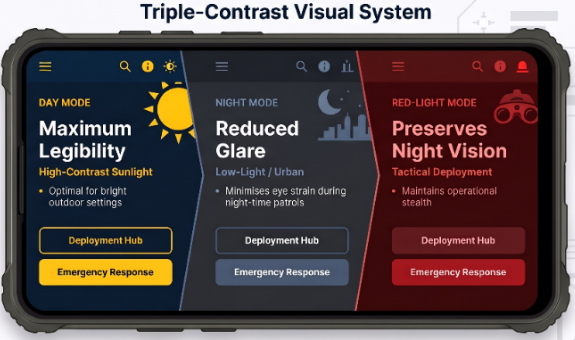
Built by officers, for officers. The POPS Notebook acts as an unfailing digital pocketbook. Whether checking the safety washing limits of flame-retardant coveralls or quickly referencing Public Order Act 2023 disruption thresholds, officers have instant, offline access to NPCC doctrine when they need it most.
Clear Heads & Defensible Decisions
For Gold, Silver, and Bronze commanders, the app transforms rapid decisions into defensible actions. With real-time National Decision Model (NDM) loggers, Use of Force proportionality reporters, and timed major incident checklists, commanders can manage complex spontaneous disorder with absolute clarity.
Zero-Friction Deployments
Turn hours of logistical planning into a 3-second scan. Planners can construct hierarchical serial rosters and attach specific tactical orders. At the 06:00 briefing, a single QR code scan instantly populates the comms directories and call-signs of every frontline device in the room, getting boots on the ground faster.
Accountable Policing
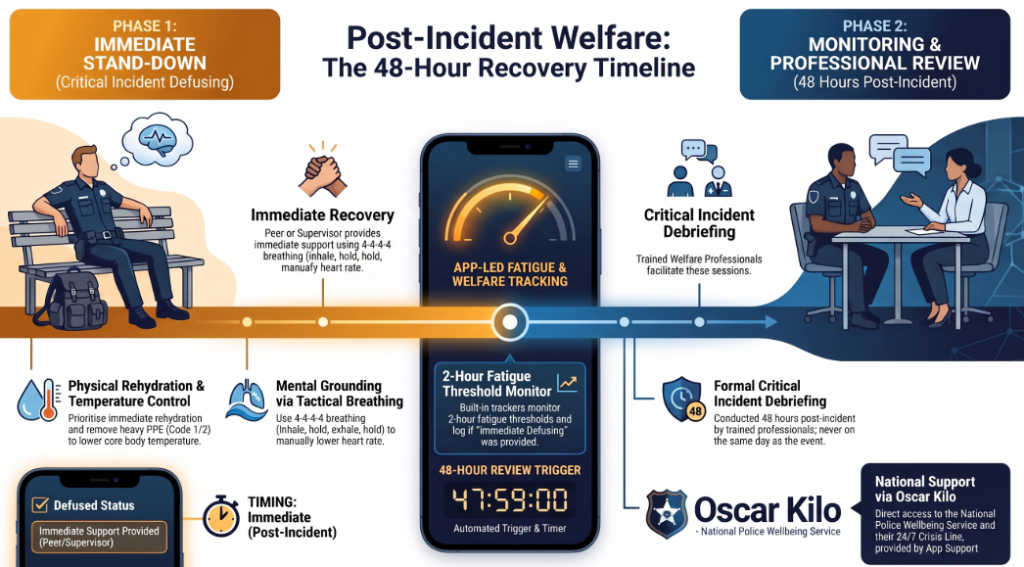
Protecting the public starts with protecting the officers. The POPS Notebook enforces strict supervisor fatigue tracking and automatically prompts Critical Incident Defusing for serials facing sustained hostility. By ensuring officers are mentally grounded and legally supported, we empower a more proportionate and accountable public order response.
Defensible Command Decisions
When a major incident unfolds, commanders are bombarded with information. The Decision Loggist module equips trained loggists to shadow senior commanders and record every decision, rationale, and discarded option in real-time using the College of Policing CIAPOAR framework. With role-gated duty access, rapid-fire entry, and permanent device wipe on transfer, the module creates a watertight legal audit trail that protects commanders from hindsight scrutiny months or years later in court.
“Standing in front of a serial at 06:00, I need to know every officer's PSU level is current, every callsign is correct, and every legal threshold is at my fingertips. POPS Notebook puts the NDM, the POA 2023, and our full tactical doctrine in my pocket — no paper, no guesswork.”
— Inspector, PSU Serial Commander
Zero Translation Loss
POPS Notebook is built by an active-duty police sergeant who operates in the same damp briefing rooms, Code 1 kit, and hostile crowd dynamics as the officers who use the app. There is zero translation loss between frontline operational friction and software delivery — the person writing the code is the person standing in front of the serial.
While traditional police IT procurement takes 6–18 months to amend a vendor contract and update a single drop-down menu for new legislation, POPS Notebook pushes over-the-air updates via PWA service workers within days. When the College of Policing revises doctrine or Parliament amends the Public Order Act, App Admins can update reference content and push it to every officer's device in seconds — no app store review, no MDM deployment window, no waiting for the IT change advisory board.
This is Domain-Driven Rapid Development (DDRD): the domain expert is the developer. Every feature is born from real operational friction, not from a procurement specification written by someone who has never held a Code 1 helmet.
Built for Communication Blackout
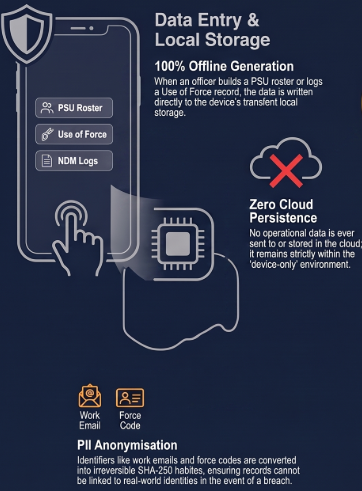
Public order deployments happen in cellular-saturated environments where networks fail. Once loaded, POPS Notebook works entirely without connection — rosters, tactical updates, sketches, decision logs, legislation references, and command broadcasts all function offline. The infrastructure supports the full operational workflow in complete network isolation, because officers in hostile crowd dynamics cannot afford a loading spinner.
Ready to Equip Your Force?
See the enterprise architecture, IA compliance documentation, and procurement options on our Licensing page.
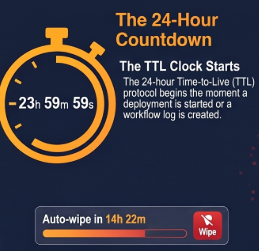
View Force LicensingReference content only. Does not replace current College of Policing APP or local force policy. Operational tools are ephemeral and device-local.